
How to soundproof a party wall correctly
Published on 23.09.2026 · Isoflect Insulation technical team
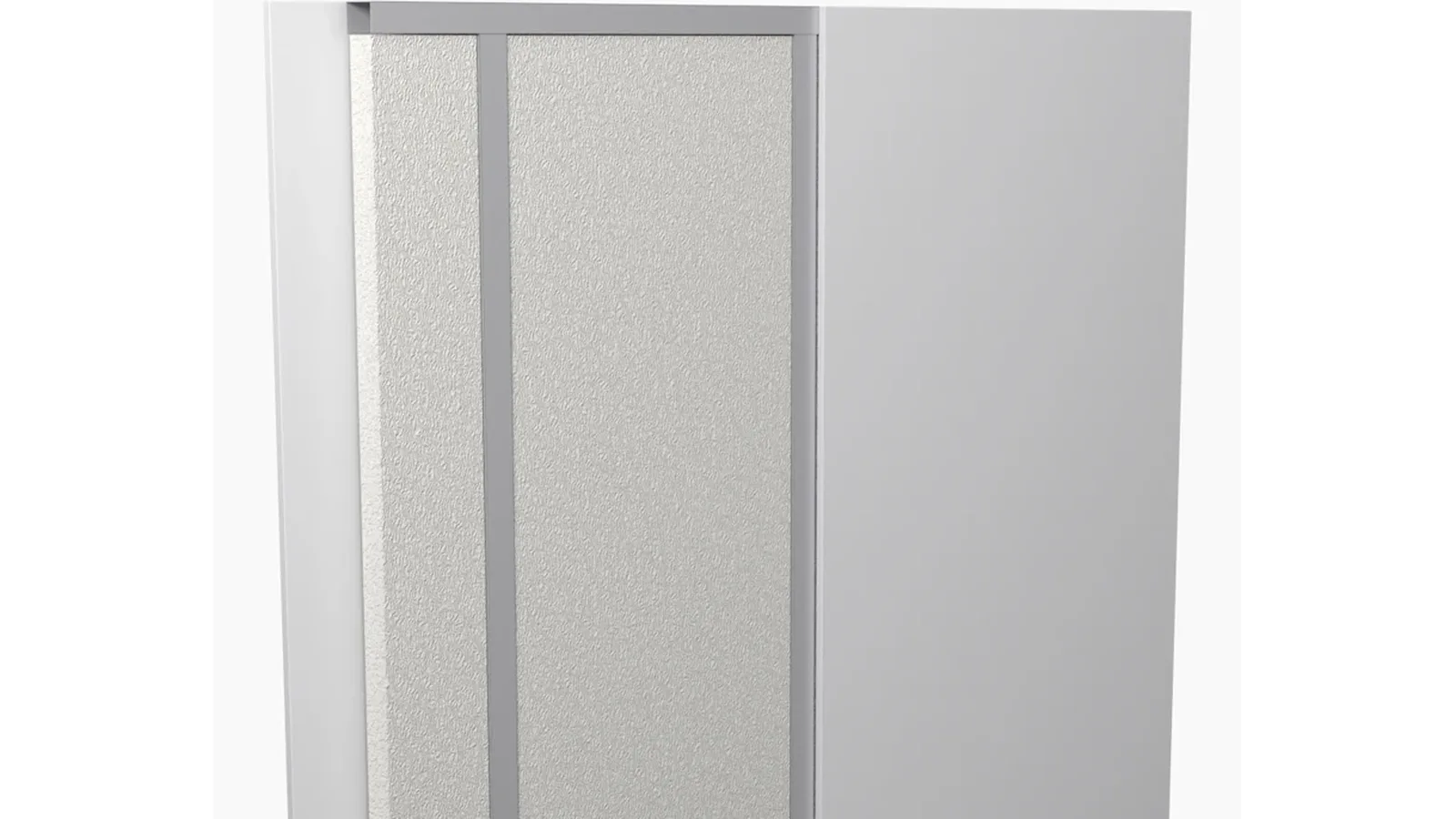
Your neighbour need not speak loudly for you to hear them. Normal conversations, the television, a dog barking or the low frequencies of music can pass through a poorly constructed party wall. The question “how to soundproof a party wall” usually arises after you have observed that simply moving furniture or applying thin panels changes almost nothing. For genuine results, the wall must be treated as a system, not as a surface onto which any material is glued.
Effective sound insulation combines mass, absorption, decoupling and sealing. If one of these components is missing, the noise will find an alternative path: through joints, sockets, the ceiling, the floor or the flanking walls. For this reason, the appropriate solution depends both on the type of noise and on the existing structure and the space you can afford to lose from the room.
How to soundproof a party wall: identify the noise
Before choosing materials, establish what you hear. Airborne noise - voices, music, television, traffic - is transmitted through the air and sets the wall vibrating. Impact noise - footsteps, dropped objects, chairs being dragged - usually comes through the floor slab, but it can also propagate laterally through the structure. Low frequencies, characteristic of bass or certain equipment, are the most difficult, because they pass easily through lightweight elements and require heavier, better decoupled systems.
A simple test assists the diagnosis. Listen to the noise at the socket, at the junction of the wall with the ceiling and next to the skirting board. If the sound is more intense in these areas, you probably have gaps or unsealed penetrations. If you hear it almost uniformly across the entire surface, the problem lies in the mass and rigidity of the existing wall.
Do not confuse sound absorption with sound insulation. Decorative panels made of foam, felt or slats can reduce the echo in your room, which improves indoor comfort. They do not, however, effectively stop your neighbour’s conversation, since they do not add sufficient mass and do not interrupt the transmission of vibrations through the party wall.
The principle that works: a second, decoupled wall
The most predictable solution for a party wall is the construction of an internal lining that is independent of, or as well decoupled as possible from, the existing wall. In practice, you build a new wall layer in front of the old one, with an absorbent cavity between them. The system reduces the sound energy in several stages: the wool absorbs the sound in the cavity, the decoupled structure limits the transmission of vibrations, and the dense boards increase the mass of the assembly.
A typical configuration includes a metal frame, a sealing or decoupling tape at the contact with the floor, the adjoining walls and the ceiling, mineral wool or ecological wool in the cavity, and one or two layers of high-density boards. For moderate noise, a compact system may be sufficient. For very clear voices, a loud television or repetitive music, it is worth allocating more space to the cavity and using two layers of boarding with staggered joints.
Thickness matters, but it is not the only criterion. Boarding bonded rigidly directly to the wall can add mass, yet it allows vibrations to pass from the substrate into the new layer. A well-decoupled structure can perform better even if the difference in thickness does not appear large. In renovations, the loss of space must be weighed against the long-term benefit: a few centimetres can transform a room that is difficult to use into a bedroom or office with absolute comfort.
The role of the wool in the cavity
Wool insulation is not a magic “plug” for noise, but an absorbent material that reduces reverberation in the space between the old wall and the boarding. Without it, the cavity can act as a resonance box and may diminish the effectiveness of the entire system. The material must be installed continuously, without gaps, excessive compaction or areas left uncovered.
The ecological wool insulation WOLLE may be an appropriate choice where noise attenuation, thermal comfort and a material that is pleasant to handle are sought simultaneously. The choice of thickness must be related to the depth of the structure, so that the cavity is filled correctly without compressing the material. For a reliable solution, always verify compatibility with the structure, the cladding and the moisture conditions of the wall.
Why two layers of cladding are often more effective
Two layers of boards installed with staggered joints increase the mass and reduce the weak points through which sound can pass directly. The joints of the first layer must not coincide with those of the second. A compatible damping compound may be used between the layers if the project aims at superior acoustic performance.
It is not necessary for every wall to receive the thickest possible build-up. In an apartment where only occasional voices are heard, a balanced and correctly sealed system is more justified than a bulky solution installed carelessly. Where there is bass-heavy music or constant noise, investment in a heavier and better decoupled structure is usually justified.
Sealing makes the difference between “better” and “truly quiet”
Sound passes through the smallest discontinuities. A perimeter joint left open, an unsealed socket or a pipe penetration can compromise work carried out with good materials. Acoustic sealing must be applied around the perimeter, at the junction between the new cladding and the building elements, as well as around penetrations.
Back-to-back sockets on the party wall are a frequent problem. If possible, move them to another surface or avoid placing them at the same point. In the case of building services, maintain the continuity of the sound insulation layer and seal each penetration with compatible materials. Do not fill joints with rigid mortar if the system is designed to be decoupled - local stiffening can create transmission bridges.
Attention should also be paid to the ceiling, the floor and the side walls. If noise bypasses the wall through the floor slab or through structural walls, insulating only the main surface may have a limited effect. This is the phenomenon of flanking transmission. In such cases, a technical assessment before installation prevents the budget being spent on a system that does not address the dominant source.
Mistakes that reduce system performance
Most poor results arise from installation, not from the absence of a “miracle” material. Avoid the following situations:
- bonding thin foam panels to the party wall in the expectation that they will block voice noise;
- rigidly fixing the new structure at too many points directly into the existing wall;
- installing the wool with gaps, imprecise cuts or excessive compression;
- leaving perimeter joints, sockets and service penetrations unsealed;
- using a single very thin layer of cladding when the problem is intense noise or low frequencies.
Choosing the system according to the project
For an apartment bedroom, the priority is usually the reduction of voices and television noise, with a controlled loss of space. For a home office, sealing sockets and joints becomes as important as the mass of the wall, since conversations must be rendered less intelligible. For a wall adjacent to an area with music, equipment or commercial activity, the project must be treated more conservatively: a decoupled structure, an absorbent cavity, double cladding and verification of flanking transmission.
Measure the exact surface area, identify obstacles - doors, windows, radiators, building services - and calculate the final thickness before ordering. A correctly configured package reduces material waste and avoids improvisation on site. Isoflect can provide technical consultancy for the selection of a build-up adapted to the wall, the noise level and the available space.
Before starting the work, describe as precisely as possible the noise, the existing construction and the areas where it is heard most loudly. This verification of a few minutes is the starting point for an innovative, intelligent and reliable system, built for certain and predictable performance, not for a temporary solution.